When I went to interview for my position with the Yankees, I showed up in a brand-new suit and tie.
I was interviewing for a job that would have me in a weight room or on a baseball field 90% of the time.
Nobody told me I needed to dress up. In fact the guy who was interviewing me looked at me awkwardly when I walked in and said, “why the heck are you wearing that?”
We had a good laugh as I was sweating bullets outside, walking the fields.
But I never based what to wear on what the job required—I based it on what the moment required.
I wore a suit out of reverence.
Reverence for the opportunity.
Reverence for the people who took the time to interview me.
Reverence for the standard of excellence that the Yankees organization represented.
It wasn’t about trying to impress anyone. It was about recognizing the significance of the moment and presenting myself accordingly.

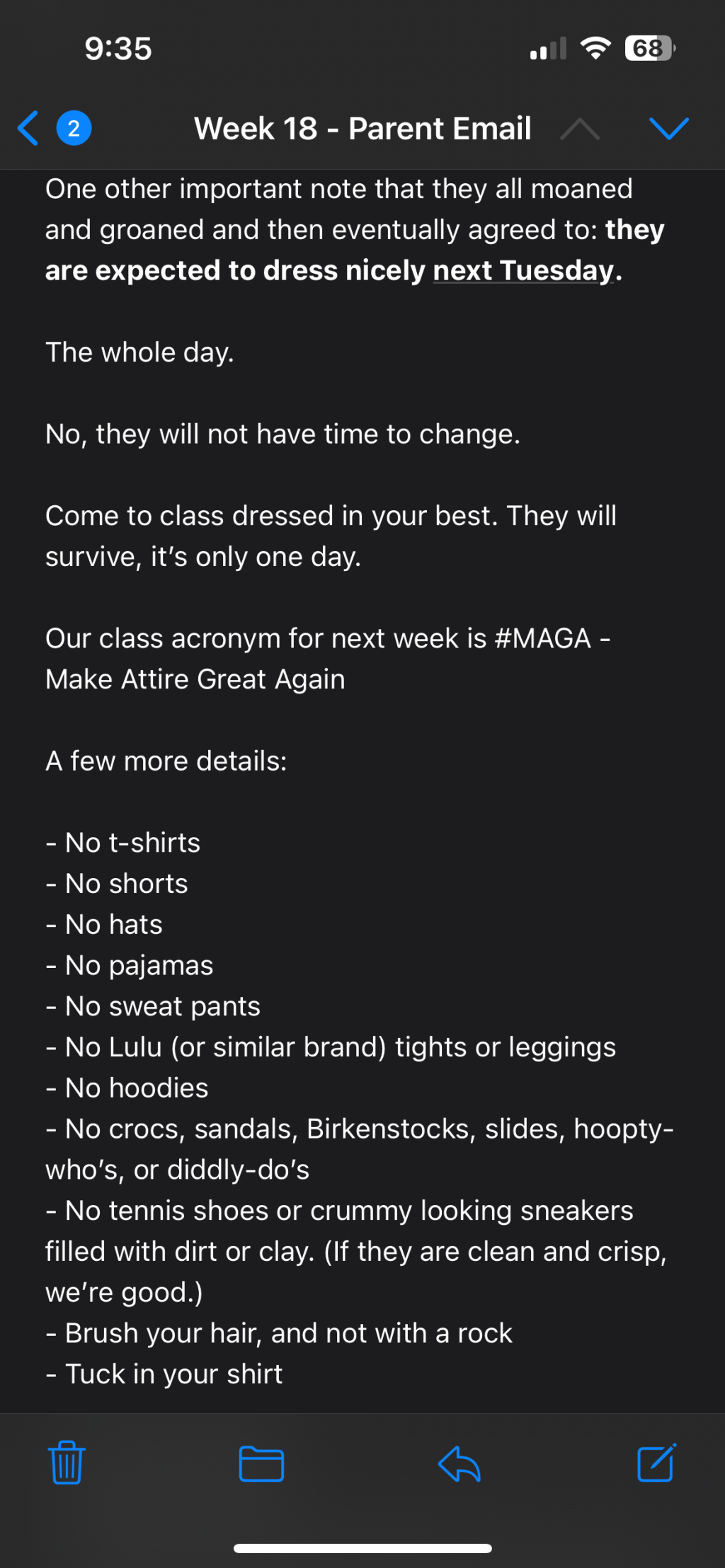
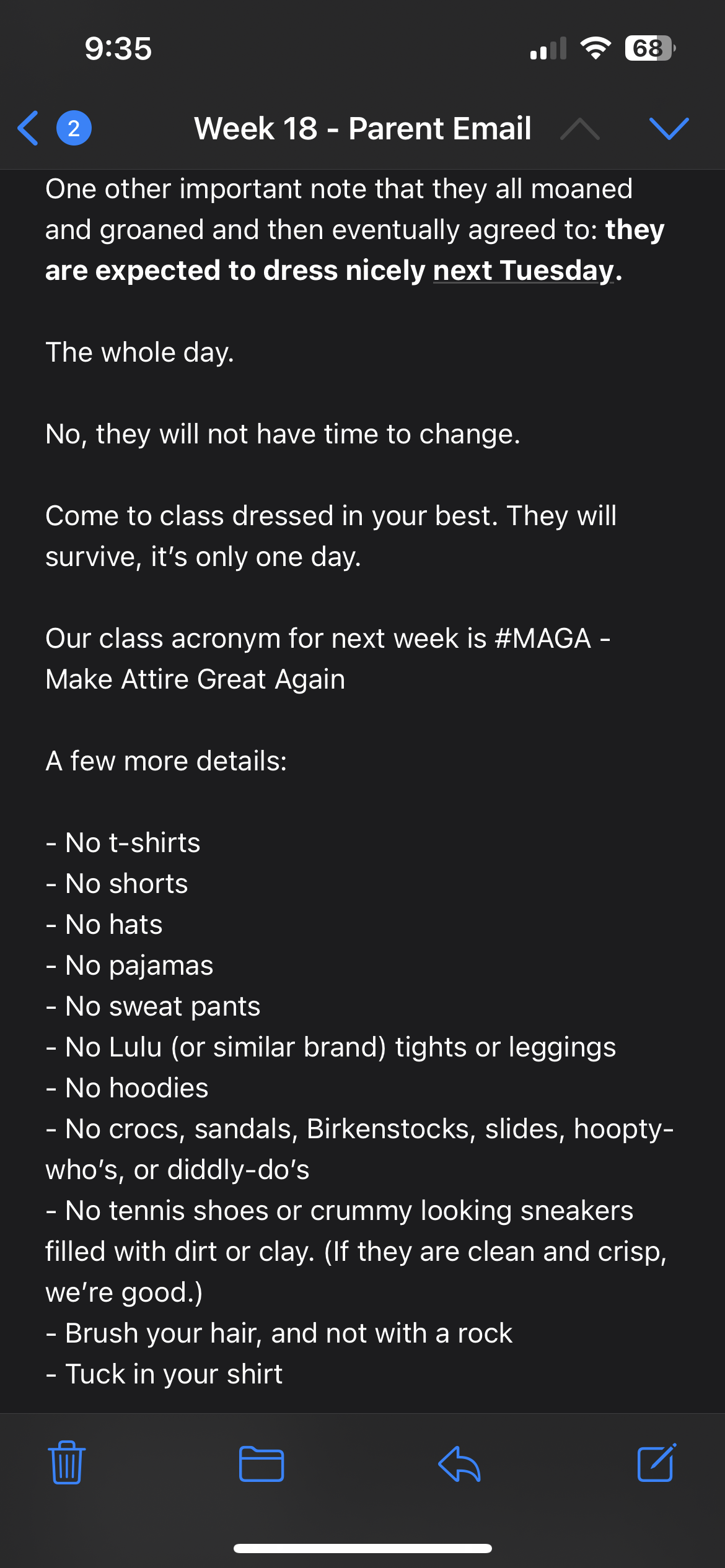
That’s why, for our science fair, I required the students to dress up.
Not because a blazer makes their hypothesis any better.
Not because a tie suddenly validates their months of work.
But because presentation shapes posture, and posture shapes perspective.
I wanted them to feel the weight of what they had accomplished—not just another assignment completed, but a major undertaking brought to completion.
I wanted them to know that when they stood up in front of their peers, parents, and judges, they weren’t just students reciting facts—they were young men and women standing confidently behind their work.
And I wanted them to see that dressing well isn’t about vanity or appearances—it’s about respect.
Respect for the process.
Respect for the effort they put in.
Respect for themselves.

But this lesson isn’t just about science fairs.
We live in a world that has slowly lost its reverence.
We’ve traded honor for convenience.
We’ve replaced formality with informality.
We’ve forgotten that sometimes, the way we present ourselves isn’t just about us—it’s about showing respect for something greater than ourselves.
That’s why we still dress up for church.
Not because God needs us to, but because we need to.
It’s a small act, but small acts shape who we become.
And if we want to raise children who understand reverence—who see the value in respecting sacred moments, hard work, and the presence of something greater than themselves—then we have to give them opportunities to practice reverence.
Even in something as simple as a science fair.
Because how we show up for the small things says a lot about how we’ll show up for the big things.
And reverence is worth showing up for.

 For Glory
Leave a comment